
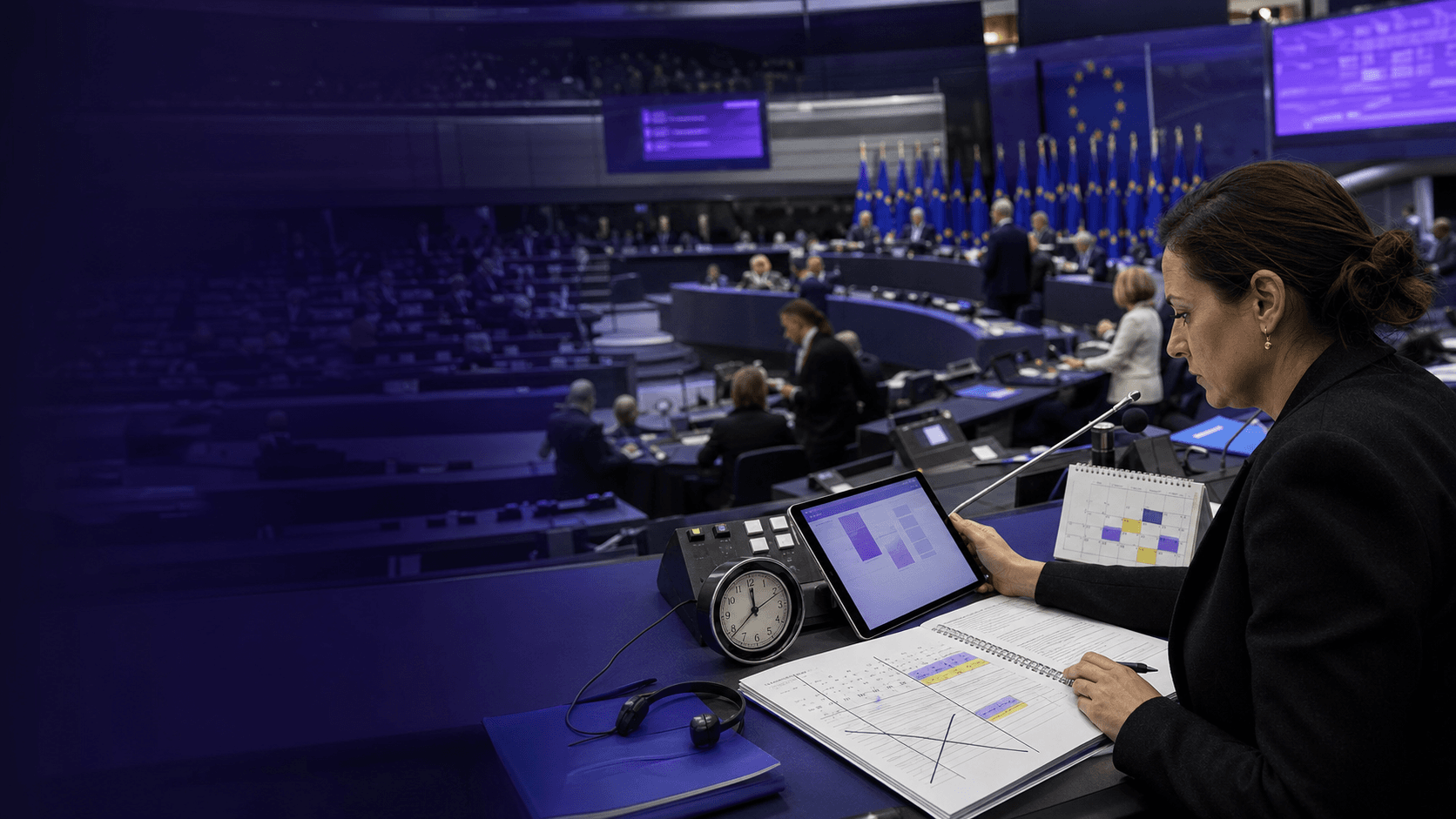
The European Parliament is moving this week to approve a Digital Omnibus package that would redraw one of the most important dates in Europe’s AI Act calendar.
MEPs are due to debate the text today (Monday 15 June 2026) and vote on Tuesday 16 June. If adopted, the agreement would push the application of key high-risk AI obligations beyond the 2 August 2026 date that many large enterprises, OEMs, cloud providers and systems integrators have been using as their planning anchor.
For AMD’s EMEA ecosystem, the immediate consequence is not technical. It is commercial and procedural. European buyers of AI infrastructure may gain more time before some legal duties bite, but the direction of procurement is unchanged: regulated customers will still expect evidence that systems can be audited, documented, governed and defended.
What changes in the timetable
The provisionally agreed text would postpone obligations for AI systems classed as high-risk use cases to 2 December 2027. This category covers areas that matter directly to enterprise AI procurement, including critical infrastructure, education, employment, migration, border management and other sensitive uses.
A second, later date would apply to AI systems used as safety components in products covered by EU sectoral safety and market surveillance law. Those obligations would move to 2 August 2028. That distinction is especially relevant for AI deployed inside machinery, medical devices, lifts, toys, watercraft, industrial automation systems and other product categories already governed by separate EU safety regimes.
This is the core business signal. Brussels is not simply giving companies more time. It is trying to prevent overlapping compliance duties from colliding just as AI systems move deeper into physical products, edge devices and industrial control environments.
The package also delays the deadline for national AI regulatory sandboxes to 2 August 2027. It sets 2 December 2026 as the new deadline for provider transparency solutions for artificially generated content, and clarifies AI Office supervision of certain AI systems based on general-purpose AI models where the model and system are developed by the same provider.
Why this matters for AMD’s EMEA ecosystem
For AMD partners selling AI servers, accelerators, embedded platforms and edge infrastructure into Europe, the changed timetable will affect procurement calendars. It may slow some compliance-driven buying decisions that were being compressed around August 2026. It may also give vendors more room to align documentation, conformity planning and customer assurance materials with the final EU framework.
But any assumption that buyers will pause governance work would be a mistake. Banks, manufacturers, hospitals, energy operators, transport groups, public bodies and education providers have their own risk committees, insurers, internal auditors and procurement rules. Many will continue asking suppliers for risk management evidence even before formal legal deadlines apply.
That means performance per watt and accelerator availability remain only part of the sale. For AI infrastructure deployed in regulated settings, vendors increasingly need to show how their stack supports logging, access control, data lineage, model monitoring, incident response, bias testing and documentation. Hardware suppliers may not be the legal provider of a high-risk AI system, but their channel partners and OEM customers will be drawn into the evidence chain.
The same logic applies to systems integrators building AI-enabled products on AMD hardware. If an integrator is embedding AI into a medical imaging system, a factory robot or a safety-relevant industrial product, the relevant question is not whether the Digital Omnibus removes compliance. It does not. The question is which regulatory route applies, when it applies, and how product safety obligations interact with the AI Act.
Simplification is not deregulation
The political framing matters. The better reading of the Digital Omnibus is not that Europe is retreating from AI regulation. The package keeps the AI Act’s risk-based structure while trying to make implementation more administrable before enforcement begins in the most complex categories.
It also adds a new prohibition. The provisional agreement would ban AI systems used to generate child sexual abuse material or non-consensual sexual and intimate content, including so-called nudifier tools. The prohibition targets realistic depictions of an identifiable person’s intimate parts or sexually explicit activity without that person’s specific consent.
That addition makes the package harder to describe as a simple weakening of the AI Act. The EU is relaxing parts of the implementation timetable, while adding a sharper ban in an area where generative AI has produced visible harm. The result is a mixed but coherent regulatory move: more time for difficult compliance, less tolerance for a specific abusive use case.
The machinery compromise is equally important. According to the Council, the agreement would exempt the machinery regulation from direct applicability of the AI Act and allow the Commission to add AI-related health and safety requirements through delegated acts under machinery law. It would also allow implementing acts to limit AI Act obligations where sectoral law already contains similar AI-specific requirements.
For hardware-linked AI deployments, that is not a loophole. It is an attempt to decide which legal instrument should carry which obligation.
What companies should do now
The text has been provisionally agreed, but it is not yet law. It still needs formal adoption by Parliament and Council, followed by legal-linguistic finalisation before entering the statute book. Compliance teams should therefore treat the new dates as likely planning assumptions, not as settled law.
The practical response is straightforward. Enterprises should reclassify AI systems against the revised timetable, map which deployments are stand-alone high-risk systems and which are embedded in sector-regulated products, and update procurement clauses accordingly. Vendors should use the extra time to strengthen technical files, risk management processes, testing records and customer-facing compliance packs.
For AMD’s EMEA market, the larger trend is intact. Europe’s AI infrastructure opportunity is becoming inseparable from compliance readiness. The Omnibus may ease the calendar pressure, but it does not change the buyer’s central question: can this system be trusted, explained and governed when regulators, auditors and customers ask for proof?
Sources
This article is based on official materials from the European Parliament, the Council of the EU, the European Parliamentary Research Service and the European Commission. (europarl.europa.eu)